ROSS STREET, PORT MELBOURNE
Once mostly a hub of industry and maritime activity, Port Melbourne is now also home to loyal residents who enjoy its historic bayside charm. In such established and beloved suburbs, planning for infill development requires careful thought, balance and an appreciation for neighbourhood context. UPco Associate Director Kellie Burns takes us through one of these projects, reflecting on how it ended up being the right team that made all the difference.

The project in a nutshell
Situated on a street lined with low-rise homes and punctuated with a corner pub, the original site contained a church from the turn of the 20th century and a small vacant lot. Our client’s original concept had been to sensitively refurbish the church, which garnered support from Council. On the vacant lot, the vision was to accommodate three townhouses that would respond to the streetscape and, critically, their neighbouring heritage church.
The process (and its challenges)
Like many established residential parts of Port Melbourne, the neighbourhood has a close-knit character shaped by smaller lots and homes. For long-standing residents, this prompted concerns about how additional housing would fit within the streetscape. We worked alongside Emma Tulloch Architects, who found creative design solutions that responded to objections, aligned with planning policy and secured luxurious levels of amenity for future residents.
As the project evolved, the plans for the church changed. The owners chose to subdivide the site, allowing the church to be sold separately (which has since been adapted into a home). We connected our client with Planning and Property Partners, who we knew would provide the legal advice needed for the subdivision – and together, we successfully navigated the process.
Why we love this project
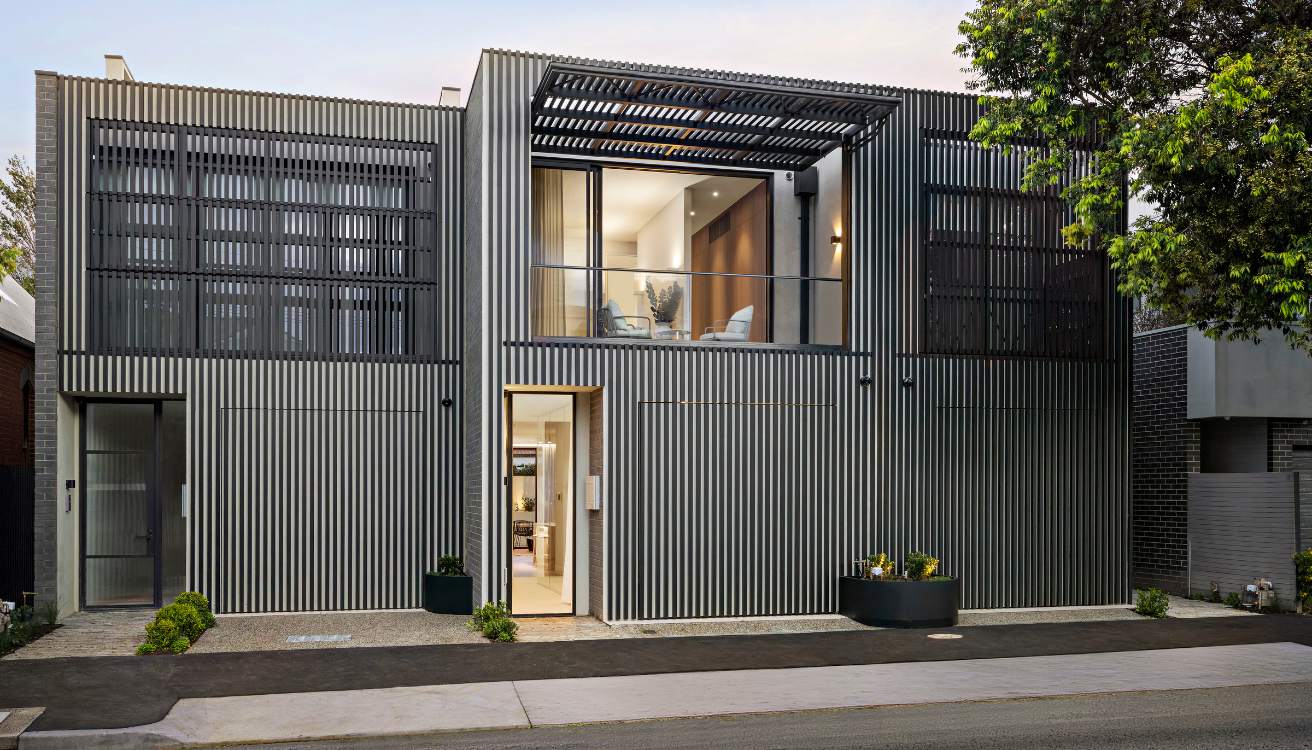
Now constructed by Progressio, the three townhouses present as only two storeys to the low-density streetscape, while offering a basement level and rooftop terrace to their residents.
The project required plenty of brainstorming and collaboration, and it was a privilege to bring our network to the table as part of that. Having the right people for the job resulted in a successful subdivision and a sophisticated townhouse building on what had been an empty lot. Looking back, it was this collective problem-solving that helped make the most of a constrained site – all while benefiting the existing residents and the people who now call Ross Street home.
Cover image courtesy of Progressio